
Spine & Nervous System Support
Spinal problems rarely stay local. When a disc degenerates or a nerve is compressed, the effects travel. Regenerative approaches target the structures involved.
Understanding Spinal Degeneration
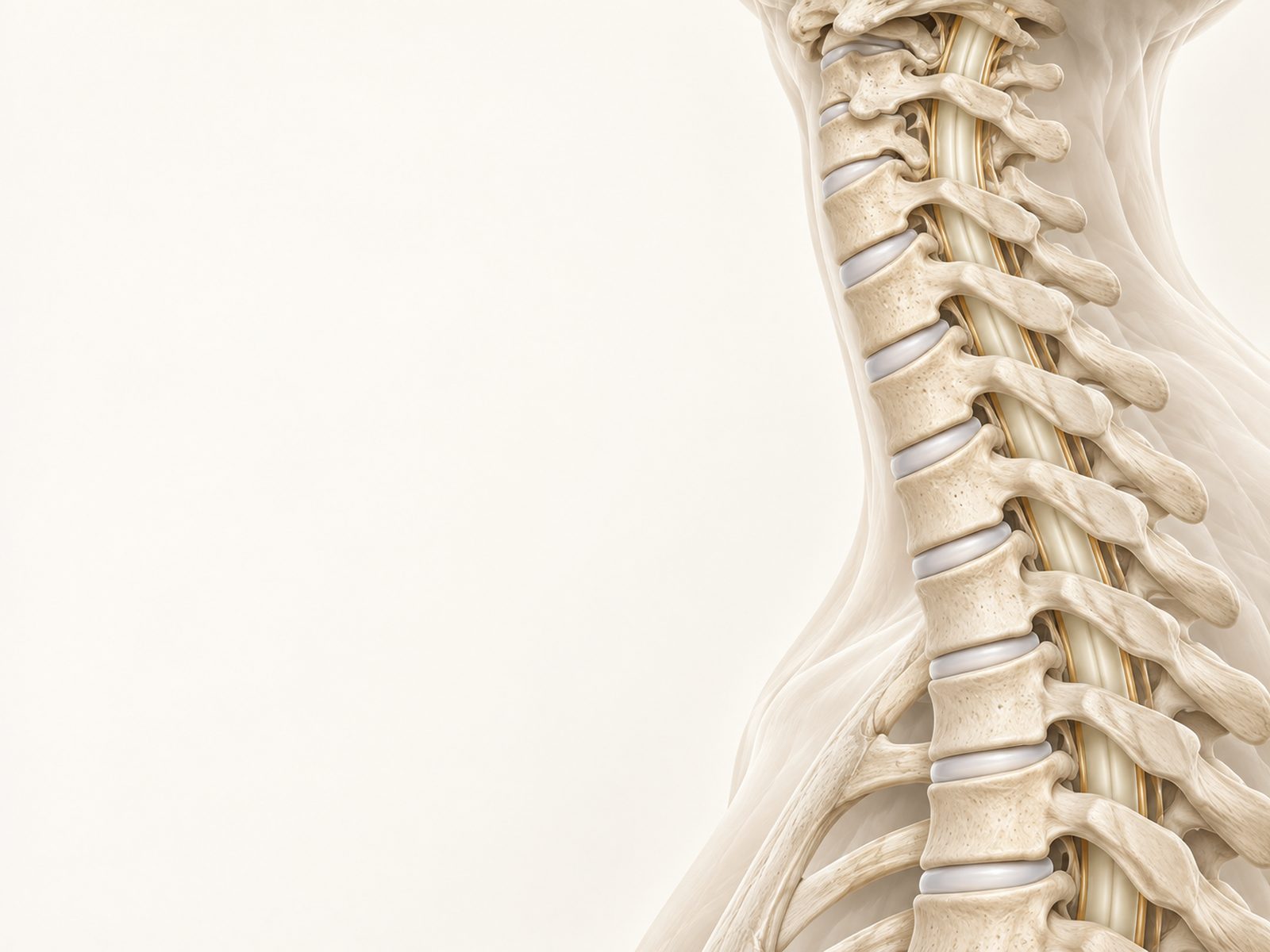
Intervertebral discs lose water content and height with age and load. As a disc flattens, the space available to the nerve roots narrows, the facet joints take on stress they were not designed to carry, and inflammation follows. Pain can present locally in the back or neck, or travel down a limb as radiating symptoms.
Discs have famously poor blood supply, which is a large part of why they heal so reluctantly on their own. Supporting the local repair environment is the central idea behind a regenerative approach to the spine.
Common Causes
- Age-related disc dehydration
- Repetitive loading or heavy lifting
- Previous spinal injury
- Facet joint degeneration
- Postural and structural imbalance
Typical Symptoms
- Persistent back or neck pain
- Radiating pain into the arm or leg
- Numbness or tingling
- Weakness in a limb
- Pain that worsens with sitting or standing
How Stem Cell Therapy Helps
MSC-based approaches target the inflammatory environment and the tissue quality of the structures involved.
- 1
Reduces Nerve-Related Inflammation
Inflammatory mediators around an irritated nerve root contribute heavily to radiating pain. MSCs release signals that help calm that local inflammation.
- 2
Supports Disc Health
Growth factors may support the cells within the disc that maintain its matrix, addressing tissue quality rather than only the symptoms of its decline.
- 3
Supports Nerve Tissue
Research indicates MSCs release neurotrophic factors that support the health and function of nerve tissue.
- 4
Addresses Facet and Soft Tissue
The joints and soft tissue that compensate for a degenerating segment can be treated alongside it, since they are usually part of the pain picture.
Treatment Protocol & Timeline
Imaging & Evaluation
Review of MRI or CT imaging alongside a physical examination to identify which specific structures are generating symptoms.
Image-Guided Treatment
Precision placement under imaging guidance, since accuracy matters more in the spine than anywhere else we treat.
Rehabilitation Support
Movement, alignment, and core stability guidance so the treated segment is supported by how you actually move.
What to Expect
- Week 1–4
- Initial response as local inflammation settles. Temporary soreness at the injection site is common early on.
- Month 2–3
- Radiating symptoms and local pain more commonly reported as reduced. Sitting and standing tolerance often improves.
- Month 4–6
- Continued change as tissue repair progresses. Spinal structures respond gradually.
Expected Outcomes
Spinal conditions vary enormously in cause and severity, and not every presentation is appropriate for a regenerative approach. Imaging and examination determine that. The following are goals, not guarantees.
Reduced Back and Neck Pain
Many patients report lower baseline pain and fewer episodes that stop them entirely.
Less Radiating Symptoms
Reduction in pain, numbness, or tingling traveling into an arm or leg.
Improved Tolerance
Longer periods of sitting, standing, or driving before symptoms build.
Better Mobility
Improved range of motion and less guarding through the trunk and neck.
A Non-Surgical Option to Weigh First
Worth evaluating before committing to spinal surgery. Whether surgery is right for you is a decision made with your physician.
Support for Daily Function
Return to work and daily activity with less of it dictated by your back.
Services We May Use
These are the approaches most often drawn on for spine & nervous system support. Which of them fits — if any — is decided at your consultation, not before it.
StemWave Therapy
Focused acoustic wave therapy to break down damaged tissue, stimulate circulation, and activate the body’s natural repair processes.
Stem Cell Injections
Regenerative cells delivered directly to targeted tissues to support repair where healing and recovery have slowed.
Acupuncture
A 45-minute session led by a highly experienced acupuncturist — 15 minutes of assessment and placement, then 30 minutes of intentional rest.
Chiropractic Adjustment
A 15-minute adjustment designed to release where the body holds stress, tension, and restriction.
Ready to Explore Regenerative Options?
Schedule a consultation to discuss your condition and whether a regenerative protocol is appropriate for you.